In July 2022, a Canadian visitor named David asked if he could see the farm for himself. He was in Nicaragua studying Spanish, and he called himself a “boots on the ground” kind of person. We said yes, and he wrote down what he saw. You can read his full account in his own words. This post looks at it from our side of the fence.
Why we welcome visitors
Anyone can write a brochure. A farm is harder to fake. When someone is considering a stake in a long-term project, we would rather they walk the rows, ask questions and meet the people working there than take our word for it.
David’s visit was arranged through a simple request to the team. Hans, the botanist overseeing the project, drove up from Managua and took him to the farm. He also met the local farmer who is there every day looking after the plants. That daily care matters as much as the planning behind it.
What stood out to him
David is a carpenter who has built with teak, so he came with a practical eye. Two things in his account are worth pausing on:
- The age of the trees. He was surprised that most of the teak was only about 1.5 years old. Teak is a long-term crop, and seeing how quickly it establishes in this climate was a highlight for him.
- The setting. The land sits on the coast, with views across the Gulf of Fonseca toward El Salvador and Honduras, and the dormant Cosiguina volcano close by. He hiked it the next day.
He also noted that new roads were being built toward the area. His own observation was that new infrastructure is a good sign for the local economy, and that it could affect land prices. That was his view in 2022, and plans change, so please ask us for current information.
Why the farm grows teak and avocado together
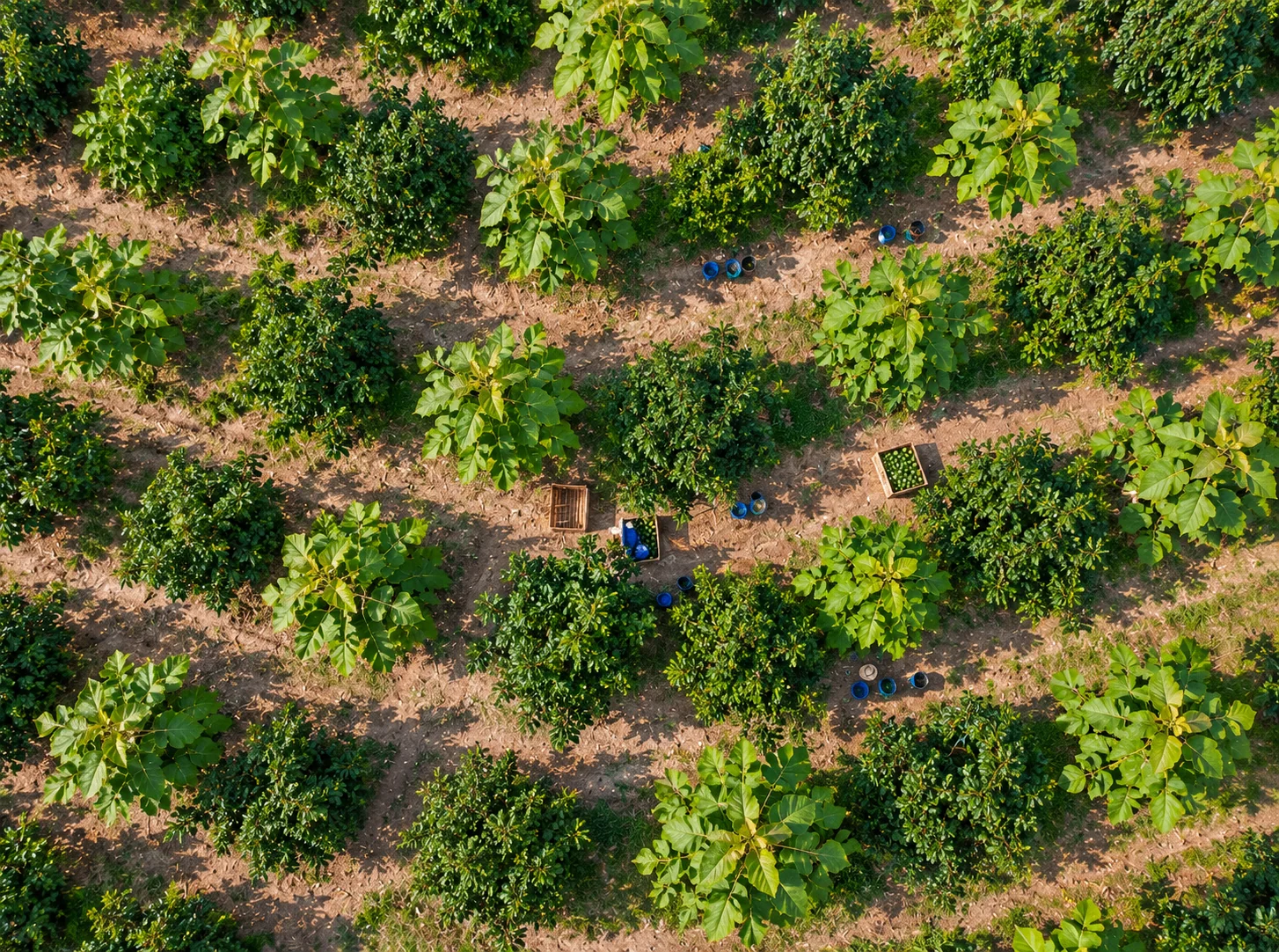
The two crops work on different clocks. Avocado is the nearer-term crop. Teak is the patient one, grown for the long term. Planting them together lets a single piece of land do both jobs, and the teak helps shelter the more delicate avocado trees. The climate and volcanic soil suit both. You can see the layout in the photo above, with the trees in alternating rows.
Why the founders built it this way
The idea behind Vida Verde is to make a working farm something people can actually take part in, not just read about. That is why there are two paths:
- Harvest Rights: a way to take part in what the Cosiguina farm produces.
- Land and residency: land that is already growing, for people considering a longer-term connection to Nicaragua.
Both come with real risks, as any agricultural or land purchase does. Crops can fail, timelines can slip and rules can change. We would rather say that plainly than leave it out.
Why consider investing, and how to decide
We do not promise returns, and nothing here is financial or legal advice. What we can offer is openness: a real farm, real people on it, and a team that will arrange a visit. David’s account is one person’s experience from one day, and it is the kind of firsthand look we encourage everyone to get before making a decision.
If you want to see Cosiguina yourself, ask about visiting the farm. The team will tell you what is possible and what has changed since 2022.